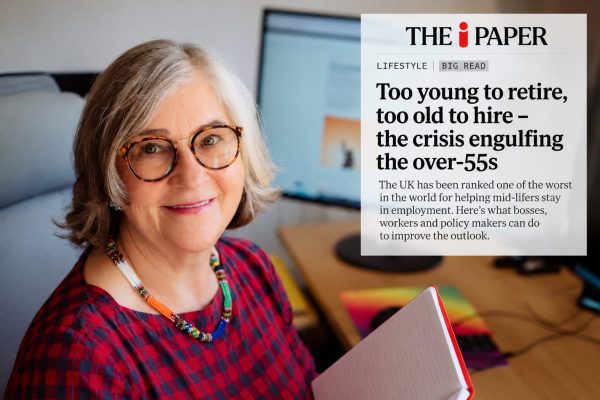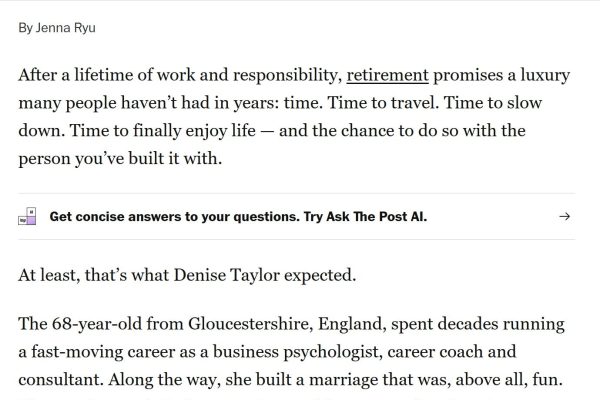

This morning I was on BBC Bristol talking about the plan to raise the state pension age to 67 and the push to keep more people in work beyond 55 and 65. The official argument is familiar: longer working lives will boost the economy and help individuals build bigger pension pots. The Institute for Fiscal Studies reports that when the pension age moved from 65 to 66, around 55,000 more people aged 65 stayed in paid work.
But the story on the ground is far more complicated.
For years we have been told that older people are needed in the workforce. At the same time, many over 50s are struggling to get hired at all. Scroll through LinkedIn and you will see highly skilled, experienced people sending out dozens of applications and hearing nothing back. Something is getting lost between government ambition and employer behaviour.
listen to the discussion here
Ageism is still real.
When a candidate walks into an interview and looks the age of the interviewer’s parent, sometimes even grandparent, assumptions are made before a word is spoken. The idea that older workers will not fit in, will not adapt, or will be harder to manage is often unspoken but powerful. Yet evidence repeatedly shows that older employees are more likely to stay, bring stability, and offer deep knowledge built over decades.
Flexibility is another missing piece.
Many people in their 60s would happily work part-time or in redesigned roles, but organisations often insist on full-time patterns that no longer suit later life. The result is that people leave completely when they might have stayed in a different arrangement.
Are people working longer by choice or by need?
It is both.
Some continue because they enjoy their work, value the social contact, and want to keep their brains active. Paid work can bring structure and purpose. But many continue because they have no alternative. The state pension is around £900 every four weeks. For anyone paying rent close to that amount, the maths simply does not work. I have met people in their 70s who are exhausted yet still working because they cannot see how they would heat their homes or buy food without that additional income.
This is a very different picture from the comfortable retirement once promised.
The skills question often comes up, especially with AI and new technology. Yet this is not an age issue. None of us knew much about AI three years ago. Whether someone is 25 or 75, we are all learning at the same time. The advantage will go to people who are curious and willing to experiment, not to any particular generation.
Fifteen years ago, when I was doing career coaching, I was already telling clients that we have to take ownership of our own development. That remains true. Qualifications, digital confidence, and adaptability matter. But so does an employment culture willing to value experience rather than dismiss it.
My own path reflects this shift.
I began work at 15 and by last summer had worked for 52 years. In my early 60s I finally did something I had wanted all my life and completed a Doctorate, researching how people find meaning after full-time work. The study showed that two things make a real difference to later life: being proactive and staying open to new possibilities. Those qualities help us age well and also make us attractive in the labour market.
These days I work less and differently. I write, research, and choose projects that matter to me. That is the future many people hope for, not endless years of full-time employment because the bills demand it.
If we want longer working lives to be positive, three things need to change.
- Employers must confront age bias and design flexible roles.
- Government must recognise that many older people are working out of necessity, not aspiration.
- And individuals need support to keep learning rather than being written off as too late.
People are not the problem. The way work is organised is.