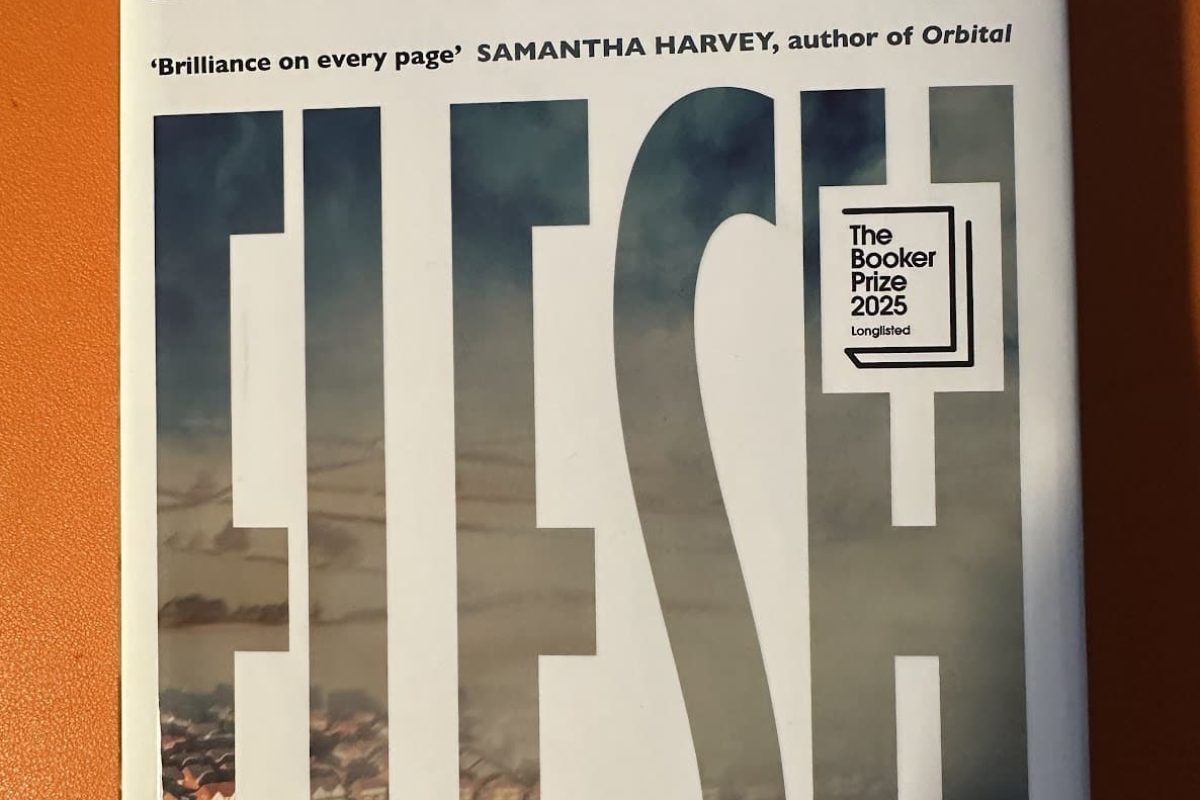

I finished Flesh this weekend. It’s just won the Booker Prize. What struck me wasn’t the subject matter so much as the way the book captures the interior life, the things we only understand with distance, the conversations that reveal more than the characters realise, and the moments that surface only when we slow down enough to notice.
A few passages stayed with me.
1. The impact of someone we only understand later
“Sometimes he misses Helen. It’s only now that he fully understands what significant part she played in his life. In another way though, it surprises him. He’s not sure why.”
That felt familiar.
How often do we look back and only then grasp the significance someone had in our lives? At the time, we’re simply living. It’s only later, with space, maturity, or age, that the full meaning emerges. Not dramatic, just real.
2. The quiet acknowledgement of disappointment
“She says that she’s disappointed at how her life has turned out.”
‘Why?’ he asks.
‘I just am.’
‘Well,’ he says, as if to point out she’s not the only one.”
This is the kind of honesty people rarely say out loud.
Many of us reach a stage where life doesn’t look the way we once imagined.
For some, that comes with disappointment. For others, it’s simply an acceptance that life is tough. That line – you’re not the only one – carries a strange comfort. Not dismissive, not minimising, just acknowledging a shared human truth.
3. The therapist asking the right question more than once
“How do you feel about it though?”
‘About what exactly?’
‘About the situation …’
‘So you want to know what I feel about that?’
‘Honestly, I’m not sure … In a way it’s easier for me that he’s not involved in our lives.’
‘How do you mean easier?’
‘He was always a sort of disruptive influence…’”
Therapy so often works like this.
The first answer isn’t the real one.
Sometimes the second isn’t either.
It’s the patient, quiet questioning – the gentle “say more” – that eventually reveals what we truly feel. Not the surface-level response, but what sits beneath it.
What I appreciated about the book overall was the simplicity. Short sentences. Sparse dialogue. Nothing overworked. And although the story is chronological, there are gaps, years skipped, scenes dropped in without warning. I’m not used to noticing that, but it worked. It reminded me of how life rarely unfolds neatly, even when we look back on it.
Mostly, it reminded me how valuable it is to read slowly and let a story work on you.
And the upside to long delays on rail travel – time to complete a book in a weekend.