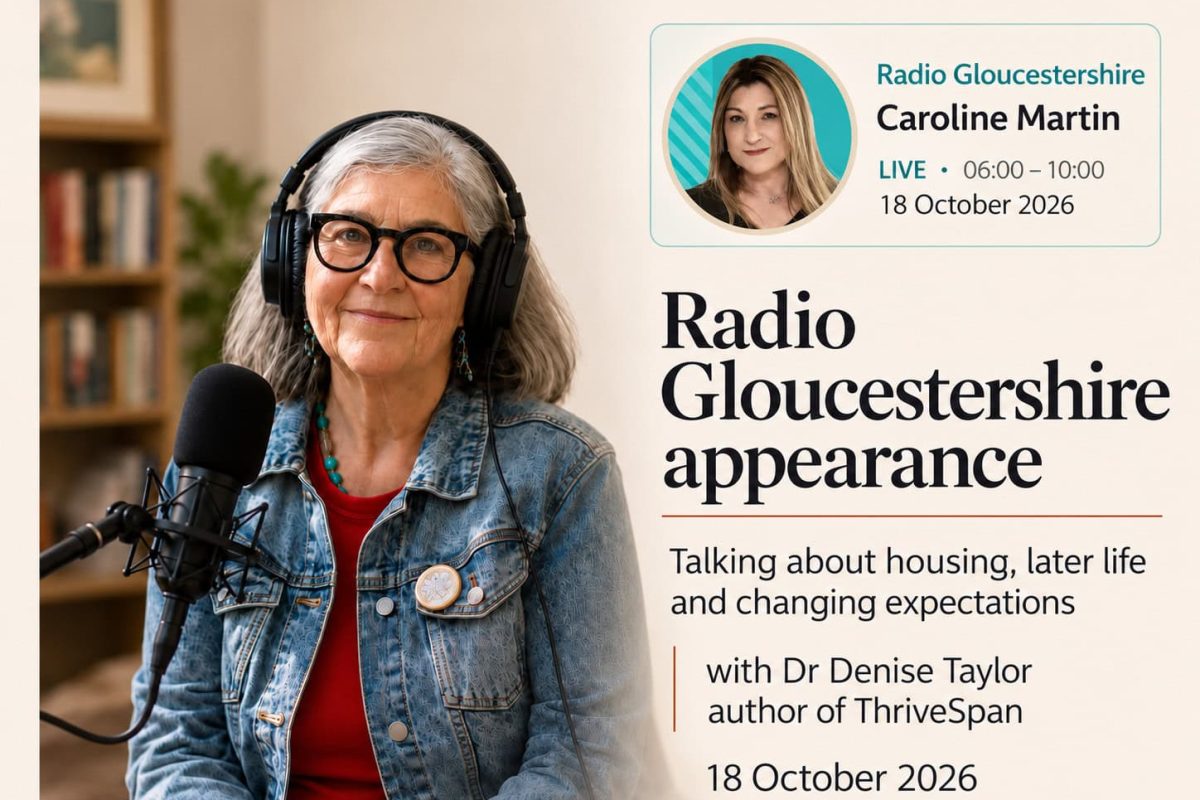

Sunday morning, I was on BBC Radio Gloucestershire talking about baby boomers, downsizing and the housing crisis. What began as a discussion about property quickly became a conversation about memories, identity and the lives we want to live.
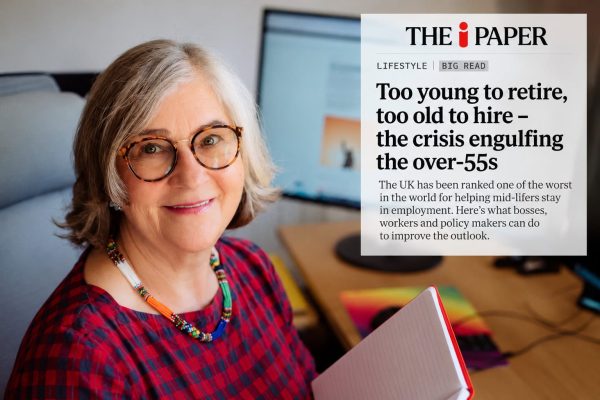
I was interviewed on BBC Radio Gloucestershire following an article I’d written for the i Paper about baby boomers being blamed for the housing crisis. The argument is familiar. Older homeowners are sitting in houses that are supposedly too big for them. Their children have grown up and left home, yet they remain in three- or four-bedroom properties while younger families struggle to find somewhere suitable to live.
Why don’t they simply downsize? It’s an appealingly straightforward solution. But as I discussed with presenter Caroline, people’s lives are rarely that straightforward.
Who decides how much space we need?
One of the first things I wanted to challenge was the tendency to treat everyone over 60 as though they were one homogeneous group. Some older homeowners are wealthy. Others have very little beyond the value of their property. Some are desperate to move somewhere smaller. Others have no intention of leaving homes they’ve lived in for decades.
And there’s a considerable difference between making these decisions at 60, 75 or 90. I’m 69. My mother is 93. We might both be described as older people, but our circumstances, physical capabilities and considerations are very different. Age alone tells us remarkably little about what someone needs from their home.
The rooms that aren’t really spare
During our conversation, I mentioned a couple I know who live in a four-bedroom house. From the outside, someone might wonder why two people need all that space. But one bedroom is theirs. Another is used for sewing. A third houses an increasingly elaborate model railway. And the fourth is somewhere for the grandchildren to stay. Every room has a purpose.
We tend to measure housing needs in terms of how many people sleep under a roof. But homes accommodate far more than sleeping. They’re places where we pursue interests, welcome family, create things, work, relax and maintain the activities that give our lives meaning. A room might look spare to an outsider while being central to the life of the person who lives there.
What happens when we give up too much?
I also shared the story of a woman who moved from a three-bedroom house into a one-bedroom flat. She wanted to release some money and reduce the space she had to maintain. On paper, it made sense. What she hadn’t anticipated was how much the move would change her relationship with her grandchildren.
There was no longer a bedroom where they could stay overnight. Nor was there a garden where they could play when they visited. Everyone was crowded into one room. Eventually, the grandchildren stopped wanting to visit. It was an unintended consequence of a decision that had seemed entirely sensible.
This is why I encourage people to think not only about what they’ll gain from a move, but also what they might lose. If gardening is an important part of your life, what will it mean to leave a large garden behind? If you regularly have family staying, will your new home accommodate them? If you enjoy creative activities, where will you do them?
Sometimes the trade-offs are absolutely worthwhile. A few pots on a patio might provide all the gardening pleasure someone wants, without the work of maintaining a large garden. But these decisions deserve thought rather than assumptions.
The memories we can’t pack into boxes
Caroline spoke movingly about her mother’s attachment to the family home, particularly following the death of her husband. She described looking out at her own garden and seeing not just what’s there today, but the children playing, the family gatherings and all the experiences associated with that space. I think many people will recognise that feeling.
A house is a physical structure, but a home holds layers of personal history. There may be marks on a doorframe recording children’s heights. A particular room might be associated with someone who has died. Even the view from a kitchen window can hold decades of memories.
Of course, we can’t keep everything forever. We also talked about the possessions we accumulate, and how difficult it can be to decide what to keep.
One practical suggestion was to start gradually, while we still have the energy and physical capacity to make decisions ourselves. One box at a time. One cupboard. One collection of things we haven’t looked at for years. Sometimes a photograph can preserve a memory without requiring us to keep the object itself.
My own mother has given me a couple of family possessions while she’s still alive. She enjoys knowing that I have them, and she can see them whenever she visits. I rather like that approach. Passing things on can be part of living, rather than something that happens only after death.
Downsizing isn’t always cheaper or easier
There’s also the practical reality of the housing market. Selling a larger house and buying a smaller one doesn’t necessarily release as much money as people imagine. There are moving expenses, legal fees, and potentially stamp duty and other transaction costs.
And what suitable properties are actually available? A modern, energy-efficient family house might be much cheaper to heat than an older, poorly insulated bungalow. Moving somewhere smaller could also mean moving away from familiar neighbours, shops, healthcare services and established social connections. Those things may become more important as we get older, not less.
Even the assumption that everyone should eventually move into a bungalow deserves questioning. Stairs can help us maintain strength and mobility, although accessibility needs and individual health circumstances must come first. There is no universally ideal home for later life.
Imagine yourself 20 years from now
Towards the end of the interview, Caroline laughed that she’d expected me to solve the problem, but I’d given her even more questions to consider. And perhaps that’s exactly what we need. Rather than telling people what they should do, I’d encourage them to imagine their lives 15 or 20 years from now. Think about the home you’re living in today. What works well? What makes life enjoyable? What already feels difficult?
Now imagine yourself considerably older. Will the house still work for you? Will you be able to maintain it? Will you still have access to the people, places and activities that matter? Could you adapt it rather than move? And perhaps most importantly, what would you be reluctant to give up? These aren’t questions that have to be answered immediately. But thinking about them early gives us more choices.
Beyond the blame
I understand why younger people are frustrated by the housing market. The difficulties of finding and affording a home are real. But blaming older homeowners for remaining in properties they own doesn’t resolve the underlying shortage of suitable and affordable housing.
Nor does it recognise that people have different needs, priorities and circumstances throughout their lives. Some older people would happily move if there were attractive, accessible, appropriately sized homes available in the communities where they already live. Others have good reasons to stay.
And some will make decisions that look strange to outsiders but make perfect sense within the context of their own lives. Perhaps we need to stop asking why older people are occupying houses that are supposedly too big for them. And start asking what makes a home suitable for the life someone actually wants to live.
Because a home isn’t just an asset to be redistributed. It’s part of the architecture of a life.
This article was inspired by my conversation on BBC Radio Gloucestershire on 18 October 2026, following my article in the i Paper about baby boomers, downsizing and the housing crisis.