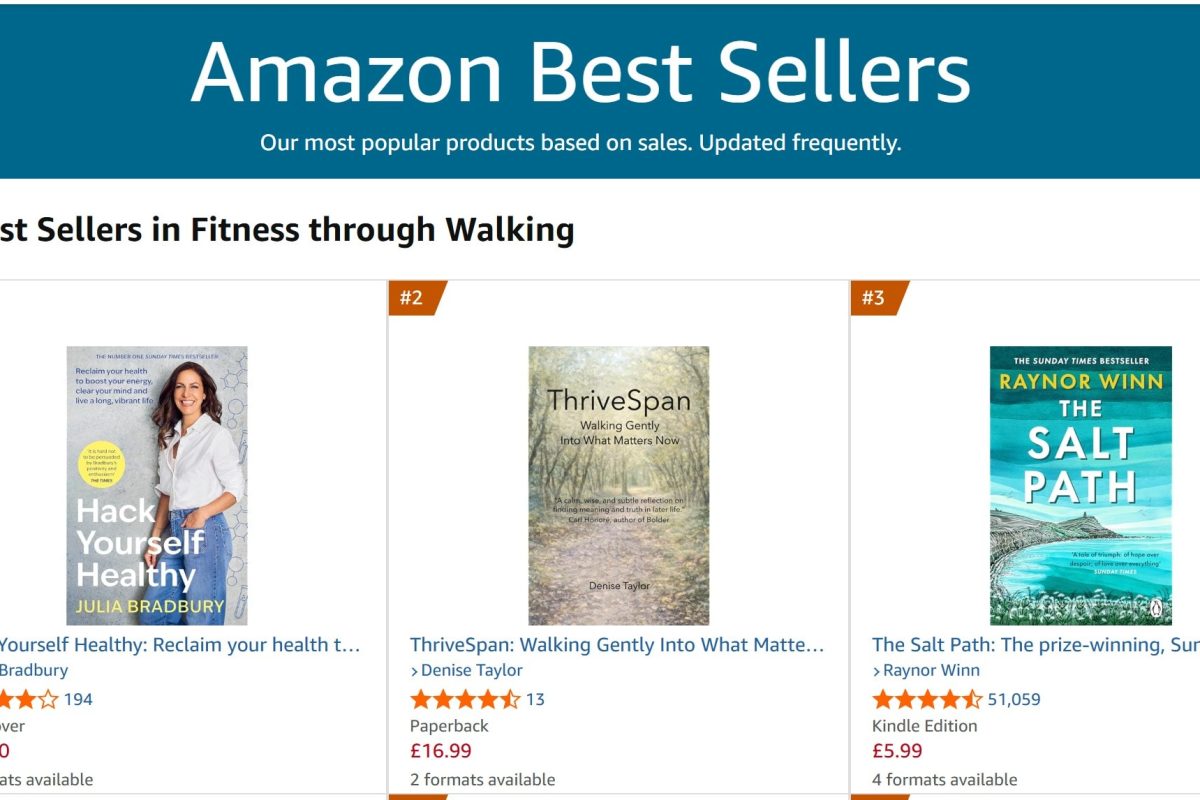

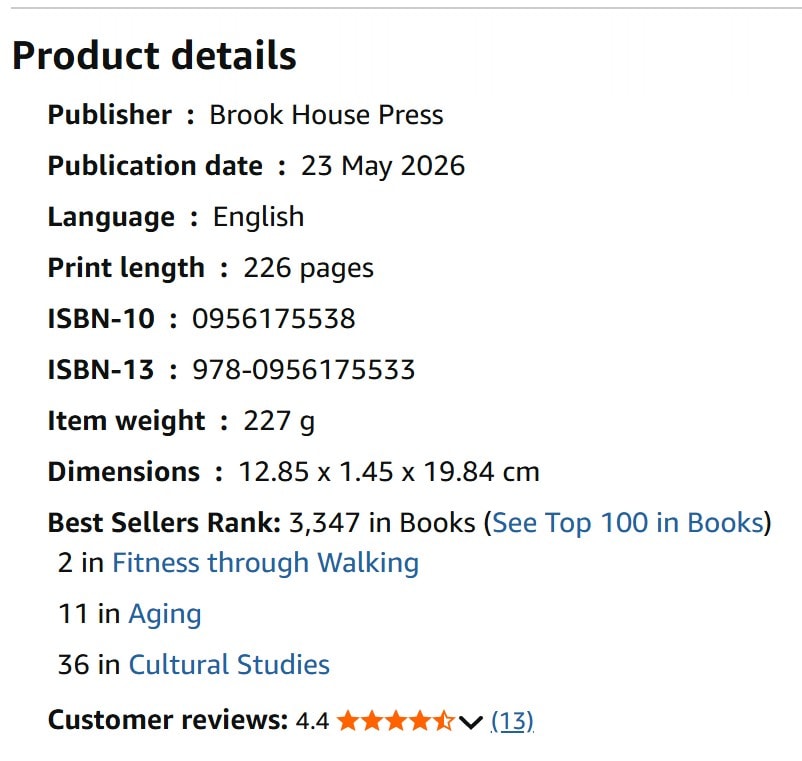
Something rather unexpected happened this weekend. ThriveSpan: Walking Gently Into What Matters Now reached number two in Amazon’s Fitness through Walking category.
It also reached number 11 in Ageing, and climbed to around number 3,300 across all books on Amazon UK.
I hadn’t planned a campaign.
There was no carefully coordinated bestseller push. I hadn’t asked a group of people to buy at the same time. I wasn’t running a launch promotion. In fact, ThriveSpan was published at the beginning of June. We are now more than three months on.
And yet, suddenly, more people are buying it. That interests me far more than a launch-week spike would have done.
When a book is first published, there is naturally a burst of attention around it. You tell people it exists. Friends buy it. People who have followed your work for some time may order a copy. You do interviews, write posts, perhaps organise events.
Then things usually settle down. The book is still there, of course, but the world moves on.
Except sometimes it doesn’t quite work like that.
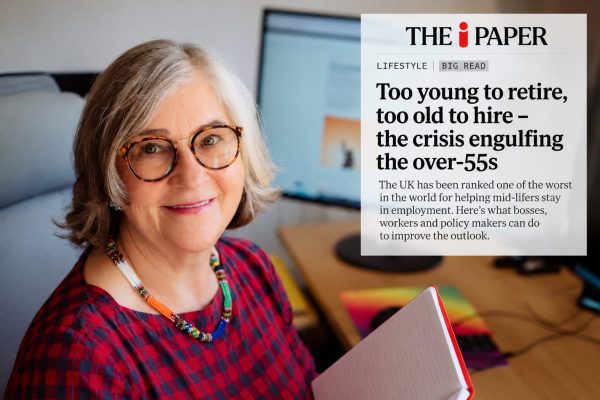
Over the past few weeks, I’ve been writing much more publicly about ageing and later life. I’ve written about why I don’t describe myself as being in midlife at 69. I’ve written about the language we use around ageing, about retirement, identity, work becoming less central, purpose, autonomy, and what happens when the old map of adulthood no longer quite fits.
Those pieces have been appearing in newspapers, on LinkedIn, on Substack and elsewhere. And somewhere in amongst all those conversations, people seem to be finding ThriveSpan.
That is the part I find fascinating. Perhaps books do not always find their audience at publication. Sometimes the ideas have to travel first. Sometimes somebody reads an article, hears an interview, sees a post, or comes across a sentence that makes them think: yes, that is something I have been wondering about too.
And then they look for more.
In that sense, a book can have a very long introduction.
ThriveSpan has always been slightly difficult to categorise, which is probably why I have been smiling at Amazon placing it so firmly in “Fitness through Walking”. Yes, there is walking in it. Walking has become an important part of my own later life. It creates space. It changes the pace of thought. It gets me away from screens, obligations and other people’s agendas.
But ThriveSpan was never really intended as a fitness book. It is a book about transition. About what happens when the things that once organised our lives – career, ambition, achievement, family responsibilities, professional identity – begin to loosen their grip.
It asks a much bigger question:
How do we live well when the old map of adulthood no longer quite fits?
For me, that question has become increasingly important. We have inherited a very simple story about adult life: education, work, retirement, old age. But life rarely unfolds so neatly now.
People may stop full-time work but continue to write, teach, create, volunteer, care for others, start businesses, return to education or do none of those things.
Some want more purpose. Some want less purpose and more freedom. Some want adventure. Some want quiet. Some are discovering that the most important task in later life is not adding more, but deciding what they are finally willing to put down.
That is the territory ThriveSpan explores.
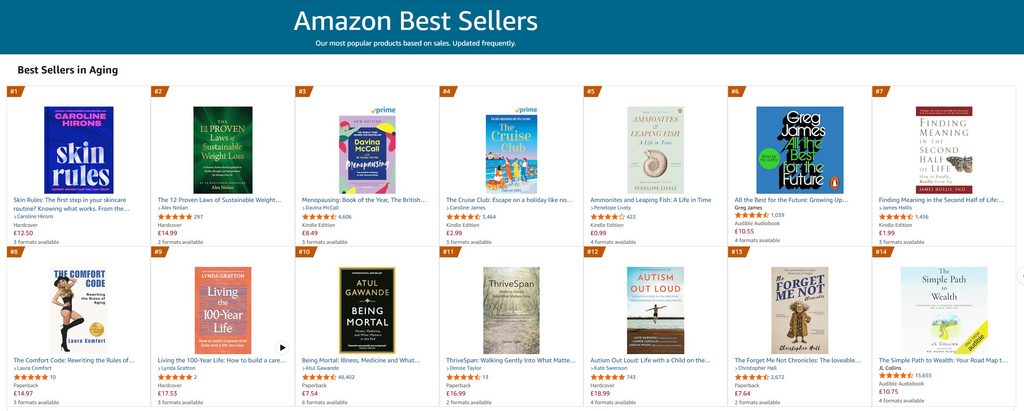
And perhaps that is why it feels particularly satisfying to see people discovering the book now. Not because I can put “Amazon bestseller” somewhere on a website. Not even because I briefly appeared alongside some extremely well-known books and authors. But because it suggests that the ideas themselves are resonating.
There is also something reassuring here for writers. We are often encouraged to think of publication as a single moment. Launch day. Launch week. Pre-orders. Rankings. Reviews.
The frantic little window in which a book is apparently supposed to prove itself.
But perhaps that is far too narrow a way to think about it. A book can sit quietly for months. Then someone mentions it. Someone writes about the subject.
A conversation begins. Another conversation follows. And suddenly the book starts moving again.
You publish it. And sometimes the conversation catches up with it later. I rather like that.
Especially because ThriveSpan was written from exactly that place: the belief that life does not have to follow the timetable we have been given.
Apparently books don’t either. And as I write this, another copy has sold. So perhaps the conversation is still catching up.