
I was talking on BBC Radio 5 Live today about retirement in professional sport.
Lionel Messi has announced his retirement from international football. Novak Djokovic, now 39, is once again prompting questions about how long he will continue playing. Serena Williams has returned to competitive tennis after several years away, while Venus Williams is still competing at 46.
Inevitably, the question gets asked: when should a great sportsperson know it is time to stop?
But I think that may be the wrong question.
We tend to look at retirement from the outside. We see declining performance, younger competitors coming through, injuries becoming more frequent or someone who is simply no longer as dominant as they once were.
And we think: surely they have done enough.
They have the trophies. They have the records. In many cases, they have more money than they could ever spend. What possible reason could there be to carry on?
But perhaps achievement, and certainly money, is only a small part of it.
When what you do becomes who you are
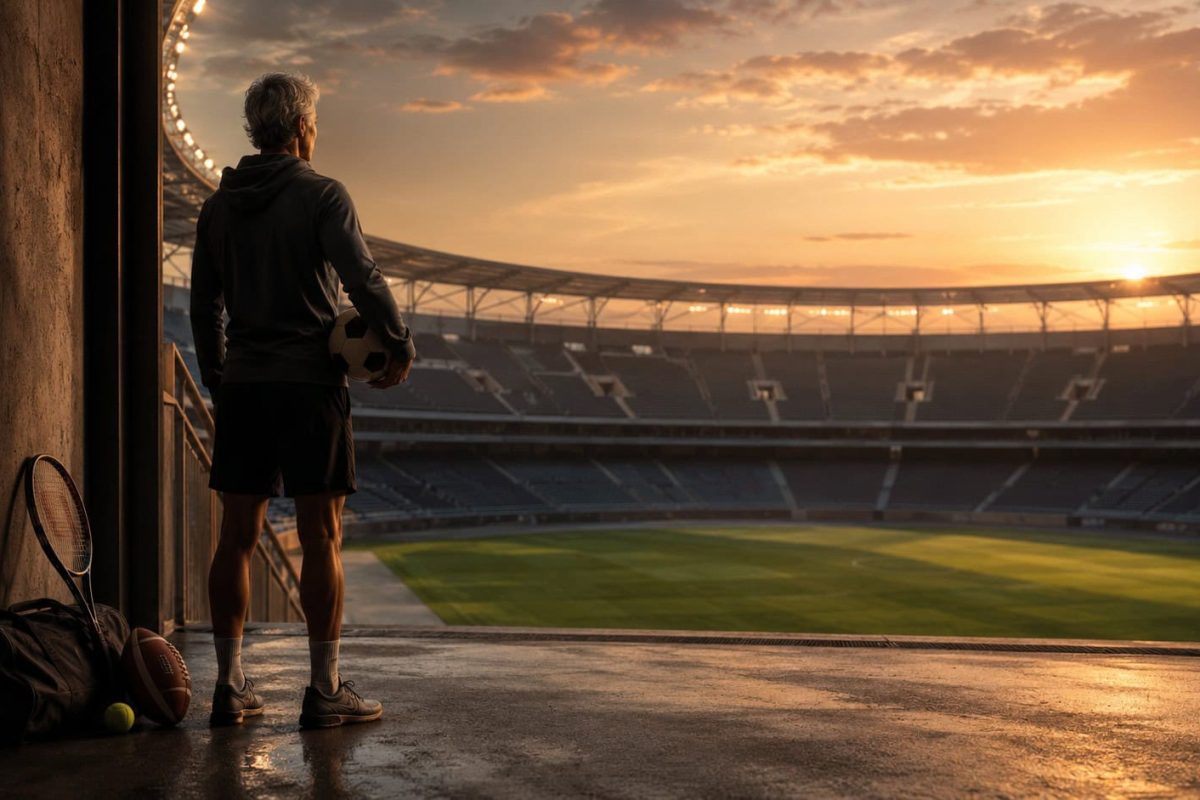
Imagine having spent most of your life not simply playing tennis, but being known as one of the greatest tennis players who has ever lived. Or not simply going to work each morning, but walking into a stadium where thousands of people know your name.
There is competition, mastery, structure, purpose, camaraderie, adrenaline, recognition and the knowledge that you are exceptionally good at something.
Then one day you are supposed to stop.
That isn’t simply retirement from a job.
It can be retirement from an identity.
This is particularly stark in elite sport because many athletes have been immersed in their sport since childhood. There may never have been an adult version of themselves that existed separately from being the footballer, the tennis player or the Olympic athlete.
So when we ask, “Why doesn’t Djokovic just retire? He has nothing left to prove,” perhaps proving something isn’t the point at all. He may simply still want to do the thing around which his life has been built. As I noted when thinking about this earlier, mastery, structure, purpose, the crowd and being part of that world may matter far more than money.
Our obsession with going out at the top
There is another assumption I find interesting: that great performers should leave at precisely the right moment.
Win the championship. Lift the trophy. Wave goodbye.
It makes a wonderfully neat ending.
But whose need for a neat ending is it?
Ours, perhaps.
We want to remember people at their best. We don’t necessarily want to watch the great champion lose in the first round or discover that the younger generation can now do what they once did.
Yet if somebody still loves competing, why shouldn’t they continue?
If Venus Williams wants to walk onto a tennis court at 46 knowing perfectly well that she may lose, perhaps the interesting question isn’t, “Has she stayed too long?”
Perhaps it is:
What is she still getting from being there?
That distinction matters. We often judge later life against previous performance. You used to be able to do this. You used to achieve that. You used to be at the top.
But continuing to do something needn’t always be about being as good as you once were.
Sometimes enjoyment is enough.
The body and the identity don’t necessarily retire together
Elite sport also makes another feature of ageing unusually visible. The mind can still want what the body can no longer reliably deliver. An athlete may still have the competitive instinct, tactical intelligence and determination that made them exceptional, while recovery becomes harder and physical limitations become more apparent.
The body may begin retiring before the identity has caught up.
Most of us encounter some version of this eventually, even if there aren’t millions of people watching.
We discover that we can’t work at the pace we once did. Or that we no longer want to. Perhaps our energy changes. Perhaps our priorities change. Perhaps something happens in our family or our health that makes what seemed enormously important a year ago feel much less so now.
Messi’s decision is particularly poignant because it came in the aftermath of his father’s death. Retirement does not happen in isolation from the rest of life. Grief, relationships, ageing and changing priorities can all alter our sense of what matters.
This isn’t really about sport
The examples are unusually famous, but the questions aren’t.
What happens to the chief executive who has spent 30 years being the person everybody turns to?
The academic who still wants to research and publish at 78?
The business owner who cannot quite bring themselves to sell?
The person who retires, discovers they hate it and goes back to work six months later?
We can be rather quick to assume that somebody who continues working must be unable to let go, just as we assume that an ageing athlete should recognise that their moment has passed.
Sometimes that may be true. But not always.
Work and other meaningful activities give us far more than income. They can give us structure, relationships, status, competence, belonging and a reason to get up in the morning. Those things don’t suddenly cease to matter because somebody has reached a particular birthday.
And equally, stepping away doesn’t have to mean rejecting everything that came before. It may be possible to return differently, to participate without needing to dominate, to enjoy something without needing to prove anything, or to retain part of an old identity while allowing other parts of ourselves to become more important.
Perhaps that’s one of the more useful ways of thinking about retirement generally.
It isn’t simply deciding when you’ve done enough.
It is working out what you still want, what you are ready to leave behind, and what else there might be room for.
Because ultimately, the difficult question may not be:
When have I earned the right to stop?
It may be:
Will I still know who I am when I do?